
Jefferson County Criminal Court Records
A Jefferson County criminal court record is the District Court file for a prosecution. It is opened when the State files a complaint, information, or other charging paper and the case is assigned a court number. The court file may contain the charge list, bond orders, warrant entries after filing, appearance records, motions, plea records, diversion terms, trial results, sentencing orders, probation conditions, revocation filings, and expungement orders. The Jefferson County District Court is part of the Kansas Second Judicial District and is the local trial court for felony prosecutions and many state criminal matters.
Jefferson County does not publish a separate county-run criminal case database. The practical search path is the Kansas District Court Public Access Portal, courthouse terminals, and the local Clerk of the District Court. Municipal traffic or ordinance cases may sit with a city municipal court instead of District Court. Federal criminal cases are separate and are not part of a Jefferson County District Court record. Arrest, custody, and jail roster facts can help identify a person or booking event, but the court file is the source for the prosecution and final outcome.
The official Jefferson County Sheriff homepage links to jail, warrant, offender, press release, and contact tools that can point to an arrest, warrant, or custody event. Those tools do not replace the District Court criminal case file.
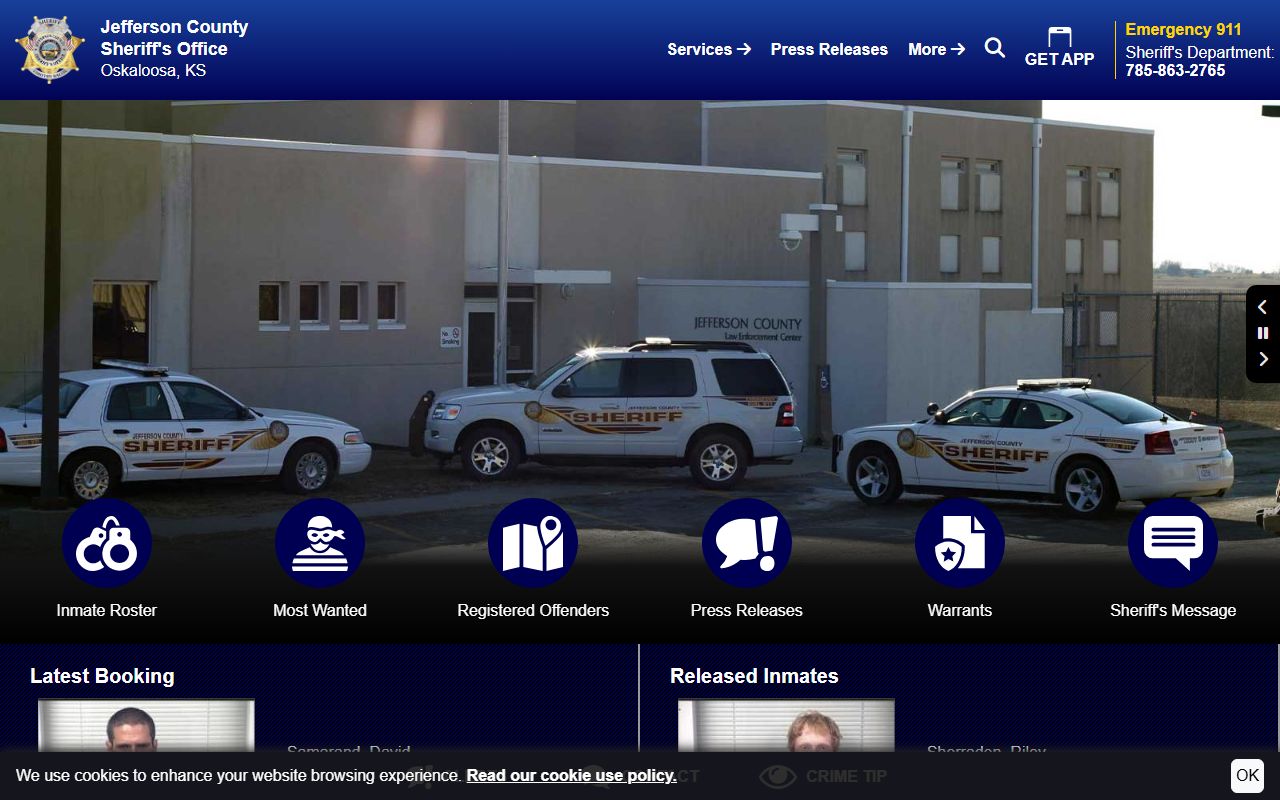
Sheriff records can show the law-enforcement side of a matter, while Jefferson County criminal court records show what happened after the prosecution reached court.
How to Search Jefferson County Criminal Records
The main online access channel is Kansas CaseSearch, the Kansas District Court Public Access Portal. Kansas court materials say district court case information and case records can be searched online or through terminals at each courthouse. The portal opens through a user-agreement gate. If online access is blocked, incomplete, or does not show the document needed, the fallback is the Clerk of the District Court at 300 Jefferson St., P.O. Box 327, Oskaloosa, KS 66066, phone (785) 863-2461.
- Open Kansas CaseSearch and accept the portal user agreement when prompted.
- Search by defendant name or case number when known. Jefferson County warrant examples use criminal identifiers such as CR case numbers.
- Check that the court is Jefferson County District Court or another correct Kansas court before relying on the result.
- Open the case detail and review docket events, hearings, charges, disposition, and public documents when available.
- Ask the Clerk of the District Court for certified copies, older files, courthouse terminal access, or non-digitized records.
Statewide criminal-history or offender tools answer different questions. The Kansas Bureau of Investigation site is useful for state criminal-history and registered-offender paths, while the District Court file shows the actual Jefferson County prosecution. The Kansas Bureau of Investigation is not the local court clerk and should not be treated as the source for every motion, hearing, or sentencing entry.
The Kansas Bureau of Investigation site is a statewide criminal-record source referenced in the manifest for this page.
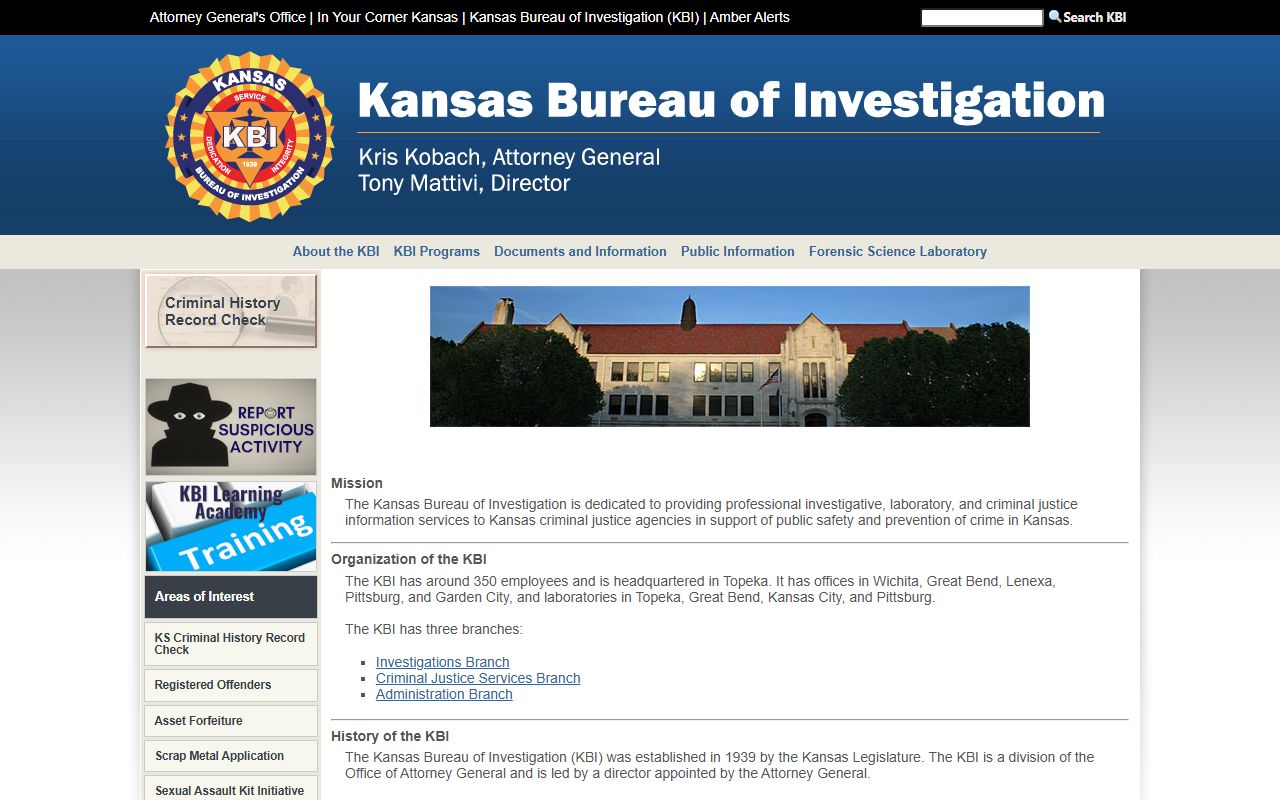
Use statewide criminal-history tools as a supplement, then verify Jefferson County case events through District Court records.
Jefferson County Criminal Case Flow
A criminal court record grows as the case moves. The first public court view may be thin, especially if a warrant is sealed, a new filing has not posted online, or the case is juvenile or confidential. Later entries can clarify whether a charge was amended, dismissed, diverted, tried, or resolved by plea. This is why the full court record is more reliable than a single jail roster or warrant entry.
Case flow: Charges Filed › Arraignment › Pretrial and Motions › Plea or Trial › Disposition › Sentencing
| Stage | What the Criminal Court Record Shows |
|---|---|
| Charges filed | The complaint or other charging document starts the court case and lists the alleged offenses. |
| Arraignment | The defendant appears, the charges are addressed, and a plea may be entered. |
| Pretrial and motions | The docket may show bond review, discovery, continuances, suppression motions, warrants, or diversion discussion. |
| Plea or trial | The record identifies whether the case ended by plea, bench trial, jury trial, dismissal, or another court action. |
| Disposition and sentence | The final result, sentence, probation, restitution, costs, and post-judgment events may appear. |
What Jefferson County Criminal Records Show
Research did not expose a public sample Jefferson County District Court case image through CaseSearch because the research browser could not pass the portal controls. The Kansas court access path still supports public district court case searches, and the research file identifies common fields that may appear when a public file is available. Not every file has document images. Older records, sealed items, redacted data, and non-digitized records may require clerk help or courthouse terminal access.
| Field | What It Shows |
|---|---|
| Case number | Kansas district court identifier, often with a year and case-type code such as CR for criminal matters. |
| Court | Jefferson County District Court, Second Judicial District, or another court if the result is outside the county. |
| Parties | The State as plaintiff or prosecutor and the defendant named in the criminal case. |
| Attorneys | County Attorney, defense counsel, assigned counsel, or other listed counsel when entered. |
| Charges | Offense text, statute or charge description, severity, amendments, dismissed counts, or added counts. |
| Bond and warrant fields | Bond amount or type, failure-to-appear events, bench warrants, or warrant returns if public. |
| Docket events | Hearings, filings, notices, continuances, orders, plea events, sentencing, and payment entries. |
| Disposition | The outcome for the case or charge, such as guilty plea, dismissal, diversion, acquittal, or conviction. |
| Sentence | Jail, probation, fines, costs, restitution, community terms, or revocation events when recorded. |
For charge-only context after an arrest, the Jefferson County arrest records and court charges page narrows the focus to the arrest-to-charging stage.
Jefferson County Charges vs Convictions
A charge is an accusation filed or pursued in court. A conviction is a final finding of guilt by plea or trial. Jefferson County criminal court records can show both, and they can also show charges that never became convictions. Some charges are amended, reduced, dismissed, diverted, or resolved in a way that does not match the first public allegation. Reading only the first charge line can lead to the wrong conclusion.
| Point | Charge | Conviction |
|---|---|---|
| Record stage | Appears when the case is filed or amended. | Appears after plea, trial verdict, or other adjudication. |
| Meaning | An allegation the State must still prove or resolve. | A court outcome that guilt was established. |
| Possible change | May be amended, reduced, added, dropped, or dismissed. | May later be affected by appeal, probation action, or expungement. |
| Where to verify | Charging paper, docket, and current charge list. | Disposition and sentencing entries in the court file. |
Jefferson County Criminal Filing Roles
Kansas uses County Attorney terminology in Jefferson County. The Jefferson County Attorney's Office prosecutes crimes committed within the county and also handles child-in-need-of-care and care-and-treatment matters. Research identified Joshua Ney as County Attorney, with the office at 300 Jefferson St., Suite 200, P.O. Box 351, Oskaloosa, KS 66066, phone (785) 863-2251. The office hours in the research file are Monday through Friday, 8:00 a.m. to 4:00 p.m.
The County Attorney's filing decision is a key difference between an arrest and a court case. A person can be booked by a law-enforcement agency, but the criminal court record becomes the prosecution record once formal charges are filed. Public defense is handled through Kansas State Board of Indigents' Defense Services or assigned counsel channels, with appointment questions addressed through District Court when a defendant is eligible.
Public Access to Jefferson Criminal Records
Kansas open-records law and court access rules allow many criminal court records to be inspected, but access is not unlimited. Jefferson County's open-records page says district court records are not county government records and directs district court record questions to District Court administration. County agency records use the county KORA process instead. That split matters because a sheriff report, a county agency email, and a District Court file do not all go to the same custodian.
Key statutes:
K.S.A. 45-215 frames Kansas Open Records Act access to public agency records.
K.S.A. 45-216 states Kansas public policy favoring open records and agency response duties.
K.S.A. 45-221 lists records agencies are not required to disclose.
K.S.A. 60-2617 addresses sealing and unsealing of case records involving warrants and subpoenas.
The Jefferson County Sheriff FAQ also gives practical context for reports and civil papers, including the local rule that police reports may be picked up, mailed, or requested by email but are not faxed.
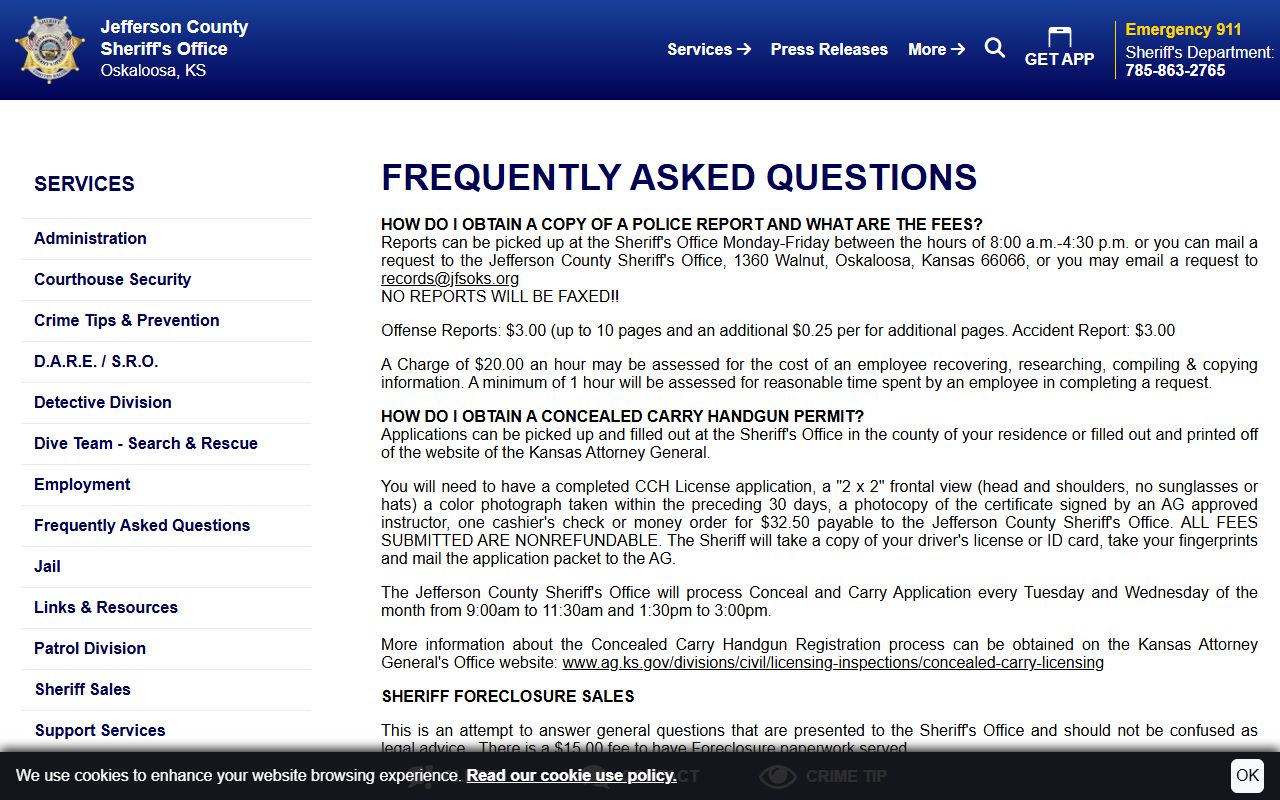
That sheriff path helps with law-enforcement records, while court case copies still run through the District Court clerk.
Related Jefferson Criminal Record Sources
Sheriff press releases, warrant pages, and offender registry links can help explain why a person or case appears in public searches. They are not substitutes for the filed criminal case. A press release may describe an incident before prosecution is complete. A warrant entry may show failure to appear or bond status. A registry entry may reflect a separate registration duty after conviction or adjudication.
The sheriff's official press-release section is one of the manifest sources for Jefferson County criminal court records.
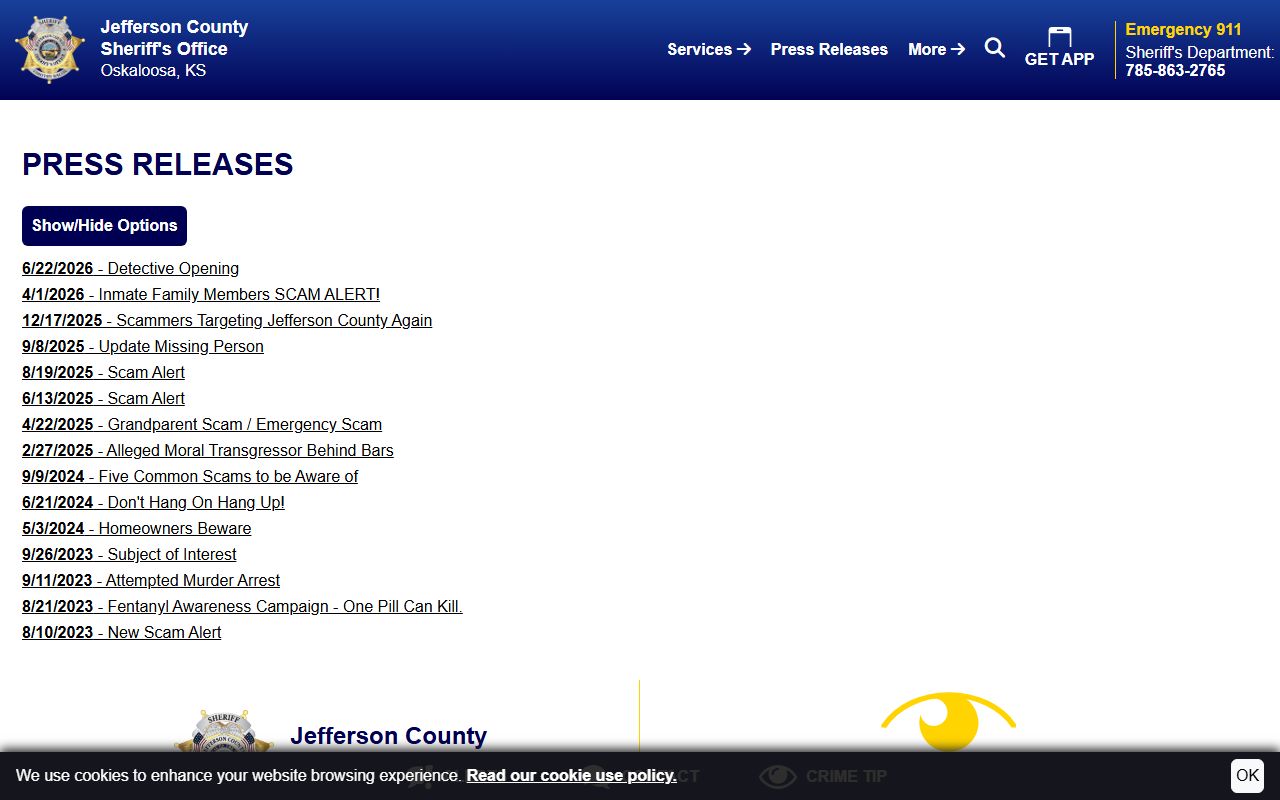
Press releases can provide incident context, but the disposition and sentence must be read from the criminal court record.
The KBI registered offender search is another related source for criminal-record research.
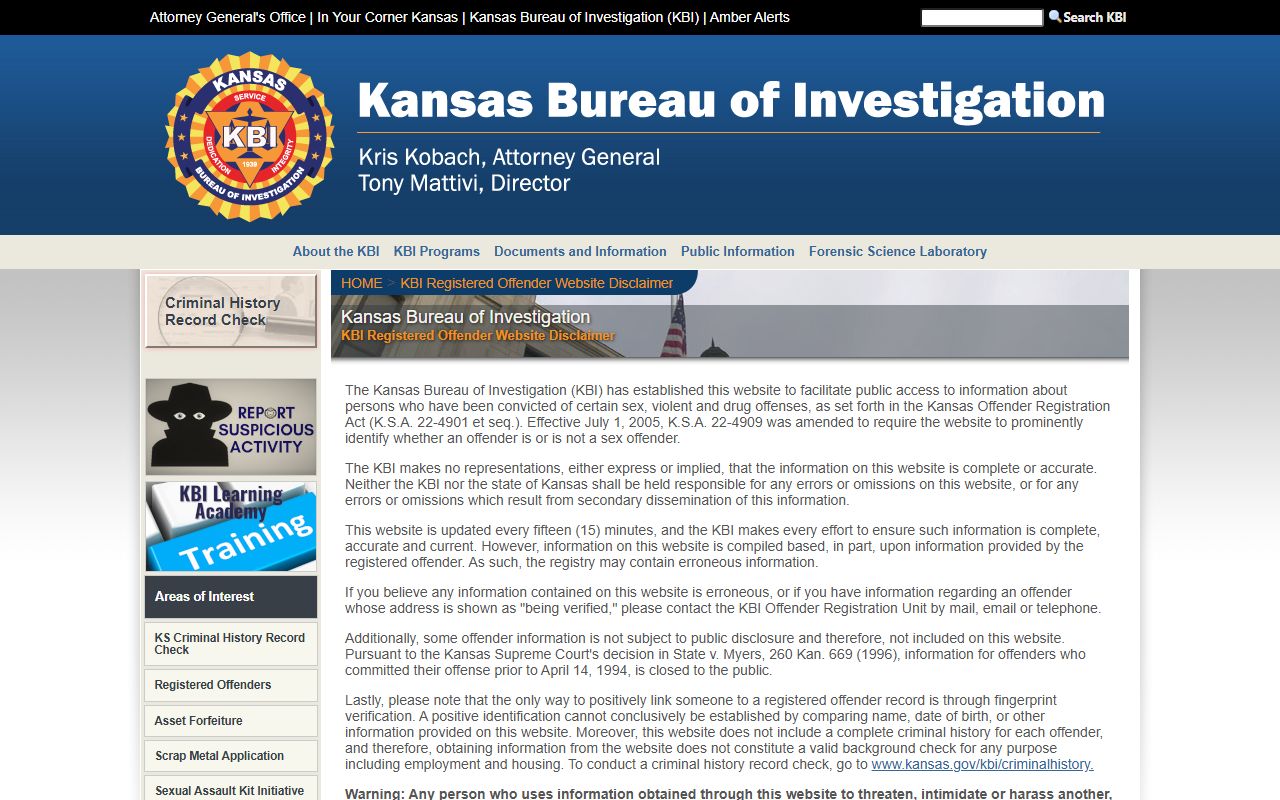
Registered-offender information is narrower than a full Jefferson County criminal case file and should be read for its specific registry purpose.
Sealed vs Expunged Criminal Records
Restricted criminal records fall into several groups. Juvenile offender information is confidential under Kansas law. Child-in-need-of-care, adoption, care-and-treatment, protected addresses, financial account data, and some victim details may be sealed or redacted. A sealed warrant may not be visible until it is executed or denied. Expungement is a separate process under Kansas law for certain convictions, arrest records, and diversion agreements.
| Point | Sealed Record | Expunged Record |
|---|---|---|
| Public access | Hidden or limited by court order or statute. | Public access is restricted after the court grants expungement. |
| Common use | Protects warrants, juvenile matters, confidential data, or sensitive case material. | Applies to eligible convictions, arrest records, or diversion agreements. |
| Kansas authority | K.S.A. 60-2617 is relevant for sealed warrant and subpoena records. | K.S.A. 21-6614 governs eligible expungement requests. |
| Still accessible to some agencies | Courts and authorized parties may retain access. | Law enforcement, prosecutors, licensing bodies, or courts may retain access in allowed circumstances. |
Note: Expungement is not the same as physical destruction of every government record.
Restricted Jefferson County Criminal Records
Kansas law restricts juvenile intake and juvenile offender information. K.S.A. 38-2326 makes juvenile offender information confidential except for listed agencies, attorneys, parties, and court-authorized access. K.S.A. 21-6614 governs expungement of certain convictions, arrest records, and diversion agreements. A Jefferson County expungement request is usually filed in the court where the case, arrest record, or diversion agreement is recorded.
A person seeking a sealed or expunged criminal record should gather the case number, charge, disposition, sentence or diversion completion data, and any waiting-period information before contacting the clerk or counsel. Filing fees were not found in official Jefferson County sources during research, so fee details should be confirmed with the Clerk of the District Court before filing. If the record involves a sealed warrant, a motion and hearing path may be more relevant than a standard expungement petition.
Public Record Search
Sponsored Results